Jinan Huanqiu Glass Technology Co., Ltd.

Laminated Glass

Why Choose Us
 

Company Strength
Jinan Huanqiu Glass Technology Co., Ltd. is a large-scale glass building materials enterprise specializing in the production and processing of various types of tempered glass, insulating glass, laminated glass, coated glass, architectural engineering glass, and high-end system door and window glass.


General Project
We Business scope includes general projects: glass manufacturing, hollow glass, laminated glass, special-shaped glass, metal door and window engineering construction: door and window sales: building materials sales; building decoration materials sales; hardware product wholesale; hardware product retail.


Professional services
Is Professional services in home decoration glass projects can ensure that all processes of architectural glass and interior decorative glass can be completed in this factory.


Our Factory
Jinan Huanqiu Glass Technology Co., Ltd. was established in December 2020. Its registered address is located in Area C, Workshop No. 1, in the yard of Shandong Chunqiu Biotechnology Co., Ltd., east of Zheng'an Road and south of Gongye North Road, Jibei Street, Jiyang District, Jinan City, Shandong Province.


What Is Laminated Glass?


Laminated glass is a type of safety glass consisting of two or more layers of glass with one or more thin polymer interlayers between them which prevent the glass from breaking into large sharp pieces.


  • Transparent Tempered Laminated Glass

    Transparent Tempered Laminated Glass

    Laminated glass is a type of safety glass that remains intact after breaking. After breaking,

    Add to Inquiry
  • Laminated Low-e Glass

    Laminated Low-e Glass

    Laminated glass is made of two or three pieces of glass sandwiched between each piece of glass, and

    Add to Inquiry
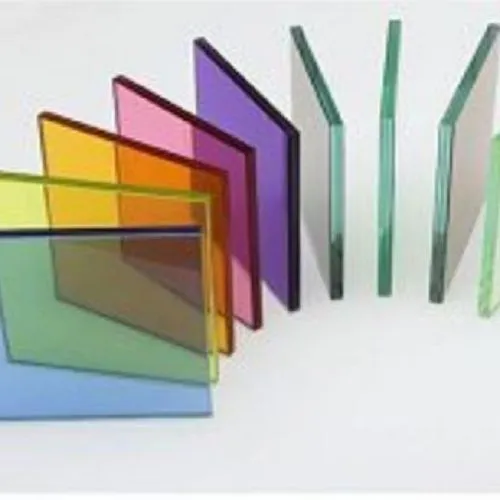
  • Colored Laminated Glass

    Colored Laminated Glass

    colored laminated glass, transparent laminated glass, decorative laminated glass, architectural

    Add to Inquiry
  • Laminated Annealed Safety Glass

    Laminated Annealed Safety Glass

    Our laminated glass is made of two or three pieces of glass, and there is a thin layer of PVB film

    Add to Inquiry
  • Clear PVB Laminated Glass

    Clear PVB Laminated Glass

    People usually choose PVB/SGP tempered laminated glass for exterior walls, curtain walls, glass

    Add to Inquiry
  • Architectural Laminated Glass

    Architectural Laminated Glass

    Architectural laminated glass/laminated glass/interlayer glass is made by bonding a layer of tough

    Add to Inquiry
  • Low-E Laminated Glass

    Low-E Laminated Glass

    REXI low-E glass has multiple layers of pure silver, which can reflect the sun's far infrared rays

    Add to Inquiry
  • Reflective Laminated Glass

    Reflective Laminated Glass

    REXI low-E glass has multiple layers of pure silver, which can reflect the sun's far infrared rays

    Add to Inquiry
  • Float Laminated Glass

    Float Laminated Glass

    Float laminated glass is made of two or more thoroughly cleaned panels, one or more of which are

    Add to Inquiry
What Are The Uses Of Laminated Glass?


The most common use of laminated glass is in automobile windshields. This is because laminated glass is much stronger than normal annealed glass and will not easily break, but on the rare occasion that it does break, it will not shatter into sharp shards, but the glass pieces will stick together, forming a spider web-like pattern, thereby reducing the chances of serious injuries.


Laminated glass is a good choice for use in buildings when it comes to providing protection against disasters such as a fire or an earthquake. Laminated glass is more resistant to fire than ordinary glass, which means that it will take time to shatter, during which the inhabitants of the building can escape. During an earthquake, the glass does not shatter immediately and falls out of its frames, making it a lot safer for people to pass by windows and get outside. This application of laminated glass extends to both residential and commercial spaces.


Glass canopies have become a popular trend in exterior decoration for their aesthetics and practicality. These canopies are generally made using laminated glass, as it is harsh weather-resistant while at the same time allowing natural light to enter the space, giving it an overall more spacious appearance. And what’s more, it keeps harmful UV rays at bay.


Shop windows and doors are often made of laminated glass so that they hold in case of a break-in attempt since shops are particularly vulnerable to robberies. For the same reason, laminated glass doors and windows are even installed in the construction of homes.


Balcony railings are often built using laminated glass owing to their impact-resistance properties and the aesthetic appeal that they render. Moreover, the glass does not obstruct the outside view, even for little kids.


Nowadays, more and more people are opting for the option of an “infinity swimming pool” or a boundary-less pool that gives the illusion of water flowing over its edge. Such pools are generally constructed using laminated glass since it is shatter-proof and highly pressure-resistant.


Its resistance to changes in temperature makes it a good candidate for the construction of skylights. Skylights made of laminated glass will not break or fall even under extreme weather conditions like a hailstorm. Other structural applications of laminated glass can be found in the making of glass railings, curtain walls, glass facades, glass roofs, etc.


Buildings with glass floors typically use laminated glass because ordinary glass would break under the pressure of all the foot traffic it would be subjected to. Overhead glass structures in buildings are also made of laminated glass, as it will not break and rain down into tiny pieces in case of an impact.


Protective cases in jewellery shops, art galleries, aquariums, banks, money exchange centres, showrooms, and other such places that house valuables are made of laminated glass due to matters of safety. Furthermore, laminated glass can also be used to enhance the visual appeal of a space, as it is available in colourful and fabricated variants.


The Benefits of Laminated Glass
 

Security
The main benefit of laminate glass is the additional security it provides to the window.

If laminated glass is broken, it's difficult to pierce and gain entry because the PVB layer acts as a barrier.

Laminated glass can withstand repeated blows from bricks or hammers. This resistance will either prevent or slow down gaining entry and help to prevent a burglary or vandalism attempt.

Laminated glass is useful for glazed external doors and for windows in secluded areas that might be vulnerable to break-ins.


UV Protection
The PVB interlayer will reduce UV transmission to stop the damage to furnishings and furniture, especially in south-facing windows.


Noise Reduction
Laminated glass can help with noise reduction because the interlayer disrupts sound waves as they pass through the glass. Sound can be reduced by up to 40dB which has the effect of seeming to move the sound further away.


Safety
In domestic properties, laminated glass will protect adults, children and pets from damage if a glazed door should break from impact.


How Is Laminated Glass Made?
 

Laminated glass is a special type of safety or security glass that holds together in case of accidents. It is simply made by sandwiching layers of polyvinyl Butyral (PVB) or structural interlayer material in between two or more glass layers. The layers are usually bonded permanently using both mechanical and chemical bonds.

High temperature and pressure are applied in the process to eliminate air bubbles from the glass layers forming a tough seal. The glass is thus strengthened enough to resist stress. In case of breakage, the sharp pieces which cause fatal injuries are held together forming ‘web like’ patterns.

This qualifies laminated glass to be a safety glass. Typical PVB laminated glass has a thickness of at least 0.38mm but multiple layers of 0.38 may be laminated to make even stronger glass panels. This is how bullet proof glass is made.

58198a8188547cbaf4a23355255c18b


Reasons to Choose Laminate Glass
 

Ensures safety from injury
Ordinary window glass is fragile and breaks into long, sharp fragments that can inflict serious harm. Laminated glass can absorb the impact energy and resist penetration because the broken glass pieces stay bound to the interlayer. This greatly reduces the risk of injury from falling glass. It’s one of the top reasons why laminated glass is increasingly specified in compliance with building codes and is required for vehicle windshields worldwide.


Provides security
Laminated glass, which consists of many glass sheets and interlayers, can provide optimum security. It can withstand break-in attempts by burglars who frequently smash windows to access door and window knobs. Laminated glass can also withstand bullets and bomb blasts. In modern correctional facilities, traditional prison bars have been replaced with laminated security glass for a more humane setting.


Helps reduce noise
Laminated glass has a greater sound reduction index than monolithic glass of equivalent thickness. Its interlayer’s “viscoelastic” quality can effectively reduce sound between the frequencies of 125Hz and 4,000Hz. Laminated glass can also reduce the coincidence effect that occurs at specific frequencies in monolithic glass. Even using at least one layer of laminated glass can significantly enhance the noise reduction properties of IG units.


Protects from damaging UV rays
The chemical reaction triggered by UV radiation is the main reason why furniture and artwork in homes and buildings deteriorate over time. With laminated glass, UV-absorbing chemicals in the interlayer can block practically all of these harmful UV rays.


Promotes energy efficiency
Tinted laminated glass can help control the amount of sunlight, heat, and glare to a more comfortable level. Reflective-coated glass or low-E glass can be combined with heat-absorbing glass tints in laminated glass. This makes it an energy efficient solution in lowering air conditioning costs.


Offers protection from environmental elements
Laminated glass provides additional protection for homes and buildings that are vulnerable to severe weather conditions or by natural calamities. Earthquakes and flying debris carried by strong winds can damage laminated glass but this will stay firmly in its frame. This helps reduce the risk of injury from falling or scattered shards.


Versatile for various designs
Laminated glazings can come in different varieties: annealed, toughened, heat-strengthened, spandrel, wired, patterned, coloured, and reflective. They can also be in a flat or curved design. The interlayers can have additional tint or the opacity can be enhanced for aesthetic or privacy requirements. High-resolution digital printing can also be applied to the interlayer before lamination. Since the design is within the glass, it is protected from scratches, stains, fingerprints, or strong cleaning agents.


Long-lasting durability
Well-made laminated glass is easy to clean and maintain, similar to cleaning ordinary glass. Its colour and strength remain consistently durable over time whilst providing safety and security benefits.


Minimises visual distortion
“Roller wave” distortion happens during the tempering process of heat-strengthened glass. The reflection on the glass appears warped. Glazing the laminated glass in an annealed condition will prevent this distortion.


Easy to install
Standard-sized laminated glass panels can be cut to size, drilled or notched for easy installation, whereas toughened glass cannot be cut after it has hardened. Toughened glass also takes more time to manufacture because of its production process. This takes longer to replace and install if it breaks, compared to laminated glass.


Laminated Glass Production Process


Colored Laminated Glass
  • The glass is cut into required shapes, designs and sizes following the clients specifications.
  • Using feeding devices and a roller table, the glass is conveyed to washing machines. In this stage, wider gaps between glass panes are automatically minimized.
  • The glass panes are thoroughly cleaned and dried using automated machines.
  • The clean, dry glass panes are then transferred to a clean room with conditioned temperature and humidity. The room is also dust free and PVB film rolls are stored here.
  • Together with the PVB films, glass panes are accurately aligned following their geometry. The sandwich is then placed on what's called a ‘nip roller’ where it’s heated and compressed simultaneously to remove air in-between the layers.
  • The nipped laminate glass is transferred to the auto-clave cart. In this final stage, controlled cycles of heat and pressure are applied to make the laminate glass clear.


Our Factory


The company has a large production base covering an area of about 8,000 square meters. It currently has 50 employees and has complete and advanced glass deep processing production equipment, cutting and grinding steel intelligent connection system, 2 fully automatic glass cutting machines, 2 glass double-sided edge grinding machines, 1 SC-E-SS-2850 horizontal through-type double-chamber double-wind grid forced convection tempered electric furnace; one laminated production line; 2 imported hollow production lines; EVA laminated furnaces and other pre-treatment straight edge machines, special-shaped edge grinding machines, fully automatic cleaning machines and other supporting production equipment, annual production and processing of glass products of about 1 million square meters.


null


FAQ


Q: What is laminated glass good for?

A: Laminated glass products make float glass suitable for today's demanding architectural applications such as: noise reduction, hurricane impact-resistance, blast mitigation, forced entry, protection from broken glass – or a combination of these.

Q: How to tell if glass is laminated?

A: You can tell if you have laminated glass by viewing it on edge. Laminated glass has a visible interlayer. It also sounds different from annealed or tempered glass when knocked on (but it may require an ear attuned to the difference).

Q: How long does laminated glass last?

A: 25 to 50 years
Laminated glass is designed to be a long-lasting material, often outlasting standard glass. On average, laminated glass can last anywhere from 25 to 50 years, depending on the factors mentioned above.

Q: Is laminated glass waterproof?

A: Yes, laminated glass is waterproof. The bonding process fuses the glass layers and interlayer creating a sealed unit that prevents water from penetrating.

Q: Is laminated glass plastic?

A: Laminated glass is a type of safety glass that is made of two or more panes of annealed glass joined together by a layer of plastic, or polyvinyl butyral (PVB). You can think of this joining as creating a glass sandwich (glass, plastic, glass).

Q: What is the purpose of laminated glass?

A: Laminated glass is generally used for safety and security purposes. This is because even if the glass is broken, the PVB layers make the glass layers stick to them so that it does not fall out of the window frame. This is especially useful in households with small children.

Q: Should I get laminated glass?

A: Reduced damage from impact: Laminated glass is known as 'safety glass' for a reason. It can withstand impacts from objects like rocks much better than double glazing. The unique design means there is a much lower risk of shattering and damage.

Q: Can you use laminated glass in a shower?

A: On some occasions laminated glass may be used in fully framed shower screen options. Laminated glass is also a type of Grade A safety glass, but edges cannot be exposed in wet/ high moisture areas as the PVB interlayer can de-laminate over time.

Q: Can laminated glass clear?

A: High Clarity and Transparency: Clear laminated glass maintains excellent transparency, ensuring optimal visibility and natural light transmission. It provides a clear and unobstructed view, enhancing the aesthetics and openness of any space.

Q: Is laminated glass bulletproof?

A: Manufacturers can engineer laminated glass to be bullet-resistant. Due to the composition of this glass and its layered construction, it won't shatter when a bullet hits it, nor will the glass fall out of its frame. Shatter resistance. Since the glass bonds to a layer of resin, it stays in place, even when broken.

Q: What is laminated glass used for?

A: Laminated glass is often used in commercial applications as glass railings, skylights, curtain walls, glass partitions, and glass facades. It is also commonly used in windows and doors in commercial buildings. Other applications include vehicle windows, shower doors, and bulletproof glass.

Q: What is advantage of laminated glass?

A: Laminated glass is better because it offers continuous protection even when broken, preventing pieces of glass from falling. It also provides better sound insulation and UV protection, making your home quieter and safer from harmful sun rays. These benefits make it ideal for skylights.

Q: Is laminated glass soundproof?

A: Laminated glass has a thin layer of polyvinyl butyral (PVB) sandwiched between two panes of glass to form the outer pane. PVB provides excellent acoustic performance by dampening soundwaves. It also makes it much more difficult to break.

Q: How do you clean laminated glass?

A: Laminated glass products are very easy to maintain. Unless otherwise instructed, we suggest cleaning with warm water and a soft cloth (terry cloth). You may also use conventional, non-abrasive glass cleaners together with a soft cloth.

Q: How safe is laminated glass?

A: One of the safest forms of glass is laminated glass. It's strong enough to be used in many high-traffic areas where safety and reliability are paramount. Laminated glass, when struck, tends to crack in a circular, spider-web type pattern, but rarely breaks outright.

Q: Do I need laminated glass?

A: The plastic layer provides a barrier and on impact any broken shards of glass will remain attached to the plastic, reducing the risk of injury. Laminated glass is very hard to break so is used in low level windows on upper storeys which must not break, balconies and balustrading, to prevent falling.

Q: How do you remove laminated glass?

A: Grab the glass and pull it outward and downward. The entire laminated window glass pane will come out of the window opening as one large piece. Unlike the windshield, laminated door-window glass is only secured along its bottom edge, so that is why this technique is so effective.

Q: How long does laminated glass last?

A: 25 to 50 years
Laminated glass is designed to be a long-lasting material, often outlasting standard glass. On average, laminated glass can last anywhere from 25 to 50 years, depending on the factors mentioned above.

Q: How to tell if glass is laminated?

A: You can tell if you have laminated glass by viewing it on edge. Laminated glass has a visible interlayer. It also sounds different from annealed or tempered glass when knocked on (but it may require an ear attuned to the difference).

Q: What is the primary use of laminated glass?

A: The primary uses of laminated glass are; safety, security, sound insulation, protection against UV radiation and lastly energy conservation. Due to the peculiarities of its design, this type of structure may be used for various purposes in residential and non-residential premises.

As one of the leading laminated glass manufacturers and suppliers in China, we warmly welcome you to buy high-grade laminated glass for sale here from our factory. All glass products are with high quality and competitive price.

Laminated Low e Glass, Reflective Laminated Glass, Clear PVB Laminated Glass
goTop

(0/10)

clearall