

Clear float glass is a fundamental material in various industries, renowned for its transparency, flatness, and versatility. As a leading supplier of clear float glass, I am often asked about the raw materials used in its production. In this blog post, I will delve into the key components that go into making this essential product.
Silica Sand
Silica sand is the primary raw material for clear float glass, typically accounting for about 70% of the batch. It is a naturally occurring granular material composed of quartz and other minerals. The high silica content (usually over 95%) is crucial for achieving the desired transparency and chemical stability of the glass.
High - quality silica sand is sourced from specific locations where the deposits are pure and well - sorted. The sand must be carefully washed and graded to remove impurities such as clay, feldspar, and iron oxide. Iron oxide, in particular, can cause a greenish tint in the glass, which is undesirable for clear float glass applications.

Soda Ash
Soda ash, or sodium carbonate (Na₂CO₃), is another critical ingredient. It acts as a flux, lowering the melting point of the silica sand from around 1700°C to approximately 1000°C. This significantly reduces the energy required during the glass - making process, making it more cost - effective and environmentally friendly.
Soda ash also helps to improve the workability of the molten glass. It makes the glass less viscous, allowing it to flow more easily during the float process, which is essential for achieving a smooth and uniform surface. The amount of soda ash added to the batch is usually around 15 - 20%.
Limestone
Limestone, or calcium carbonate (CaCO₃), is added to the glass batch to enhance the chemical durability and mechanical strength of the clear float glass. It reacts with the silica and soda ash during the melting process to form calcium silicate, which contributes to the overall structure of the glass.
Limestone also helps to reduce the tendency of the glass to devitrify, which is the formation of crystals within the glass. This ensures that the glass remains transparent and maintains its optical properties over time. Typically, limestone makes up about 5 - 10% of the glass batch.
Dolomite
Dolomite, a mineral composed of calcium magnesium carbonate (CaMg(CO₃)₂), is often used in conjunction with limestone. It provides additional magnesium oxide (MgO) to the glass, which further improves the chemical resistance and mechanical properties of the glass.
Magnesium oxide also helps to reduce the surface tension of the molten glass, making it easier to form a flat and smooth surface during the float process. Dolomite is usually added in an amount of around 2 - 5% of the total batch.
Other Additives
In addition to the main raw materials, several other additives are used in small quantities to achieve specific properties in clear float glass.
Cullet
Cullet refers to recycled glass. It is added to the batch to reduce the energy consumption and raw material costs. Cullet melts at a lower temperature than the virgin raw materials, so it helps to speed up the melting process. Typically, cullet can make up 15 - 30% of the glass batch.
Sulfates
Sulfates, such as sodium sulfate (Na₂SO₄), are added as fining agents. They help to remove small bubbles from the molten glass during the melting process. Sulfates decompose at high temperatures, releasing oxygen gas, which combines with the bubbles and causes them to rise to the surface of the molten glass and escape.
Colorants and De - colorants
Although clear float glass is intended to be transparent, small amounts of de - colorants may be added to remove any residual color caused by impurities in the raw materials. For example, small amounts of selenium or cobalt may be used to neutralize the greenish tint caused by iron oxide.
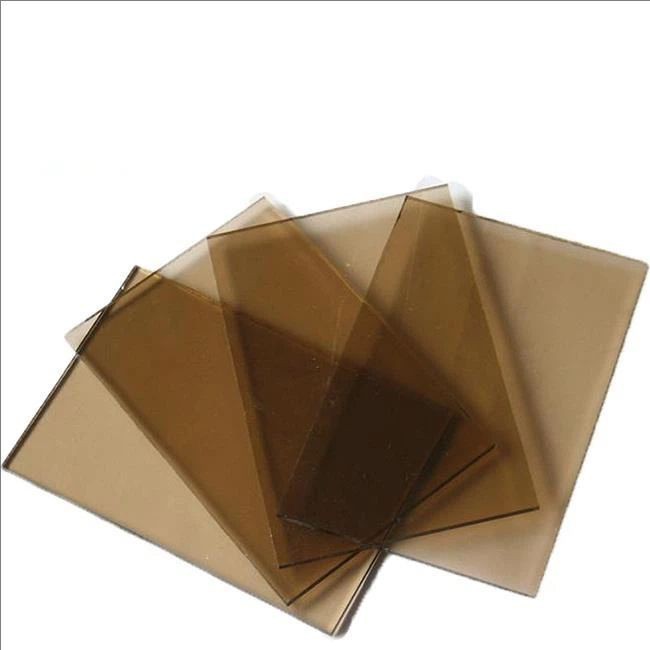
On the other hand, if colored float glass is desired, specific colorants can be added. For more information on colored float glass, you can visit Colored Float Glass.
The Float Process
Once the raw materials are carefully measured and mixed, they are fed into a furnace and heated to a temperature of around 1500°C. The molten glass then flows onto a bath of molten tin, which is called the float bath.
The float bath is a critical part of the process. The molten glass spreads out evenly on the surface of the tin, forming a flat and smooth sheet. The glass is then gradually cooled as it moves along the float bath, a process known as annealing. This helps to relieve internal stresses in the glass and improve its strength and durability.
Different Types of Clear Float Glass
As a clear float glass supplier, we offer a range of products to meet different customer needs.
19MM Float Glass
Our 19MM Float Glass is a thick and strong option suitable for applications where high strength and durability are required, such as large - scale architectural projects or industrial uses.
Ultra - clear Float Glass
For applications where maximum transparency is essential, we provide Ultra - clear Float Glass. This type of glass has a very low iron content, resulting in a nearly colorless appearance and excellent light transmission.
Contact Us for Procurement
Whether you are in the construction industry, automotive manufacturing, or any other field that requires high - quality clear float glass, we are here to meet your needs. Our team of experts can provide you with detailed information about our products, including specifications, pricing, and delivery options.
If you are interested in purchasing clear float glass, please feel free to reach out to us. We look forward to discussing your requirements and establishing a long - term business relationship with you.
References
- "The Science of Glassmaking" by John C. Mauro and Edgar D. Zanotto.
- "Glass: Science and Technology" edited by David R. Uhlmann and Nicholas J. Kreidl.
- Industry reports from the Glass Association of North America.
