

Shutter glasses are an innovative and widely - used technology in various fields, especially in the realm of 3D visualization and smart glass applications. As a shutter glass supplier, I am excited to share with you how these remarkable glasses work.
The Basic Principle of Shutter Glasses
At the core, shutter glasses operate on the principle of synchronization with a display device. They are essentially a pair of glasses with electronically - controlled shutters in front of each lens. These shutters can open and close at a very high speed, in sync with the images being displayed on the screen.
In a 3D display system, the screen alternates between displaying left - eye and right - eye images at a rapid rate. The shutter glasses have a receiver that picks up a synchronization signal from the display. When the left - eye image is shown on the screen, the shutter in front of the left - eye lens of the glasses opens, allowing the user to see the left - eye image, while the shutter in front of the right - eye lens remains closed. Conversely, when the right - eye image is displayed, the shutter in front of the right - eye lens opens, and the left - eye shutter closes.
This alternating process happens so quickly that the human brain combines the two separate images into a single 3D perception. The key to a good 3D experience with shutter glasses is the precise synchronization between the glasses and the display. Even a slight delay in the shutter operation can lead to a less - immersive 3D effect or even cause visual discomfort for the user.
Components of Shutter Glasses
Shutters
The shutters are the most crucial part of the shutter glasses. They are typically made of liquid crystal display (LCD) technology. LCD shutters work based on the property of liquid crystals to change their orientation when an electric field is applied.
When no electric field is present, the liquid crystals are randomly oriented, and the shutter appears opaque, blocking the light. When an electric field is applied, the liquid crystals align in a specific direction, allowing light to pass through, making the shutter transparent. This ability to switch between opaque and transparent states very quickly is what enables the shutter glasses to work in sync with the 3D display.
Receiver
The receiver in the shutter glasses is responsible for picking up the synchronization signal from the display. There are different types of synchronization signals, including infrared (IR) and radio - frequency (RF) signals.
IR receivers are commonly used in many consumer - grade shutter glasses. They are relatively inexpensive and work well in a line - of - sight environment. However, IR signals can be blocked by obstacles, and their range is limited. RF receivers, on the other hand, offer a more reliable and longer - range synchronization. They are less affected by obstacles and can work in a wider area, making them suitable for larger - scale applications such as in cinemas or large - screen 3D displays.
Power Source
Shutter glasses need a power source to operate the shutters and the receiver. Most shutter glasses use small batteries, such as coin - cell batteries. These batteries are lightweight and can provide enough power for several hours of continuous use. Some advanced shutter glasses also support rechargeable batteries, which are more environmentally friendly and cost - effective in the long run.
Applications of Shutter Glasses
3D Home Entertainment
One of the most common applications of shutter glasses is in home 3D entertainment systems. Many modern televisions support 3D viewing with the use of shutter glasses. Users can enjoy watching 3D movies, playing 3D video games, or even experiencing 3D sports events from the comfort of their homes.
The high - quality 3D experience provided by shutter glasses in home entertainment systems has made them a popular choice for consumers who want to enhance their viewing experience. With the increasing availability of 3D content, the demand for shutter glasses in this market segment is expected to remain strong.
Cinema Industry
In the cinema industry, shutter glasses are widely used to provide a immersive 3D experience for moviegoers. Cinema projectors are designed to display 3D movies using the alternating left - eye and right - eye image technique. Shutter glasses in cinemas are usually provided by the theater, and they are designed to be durable and easy to clean.
The large - screen displays in cinemas require a reliable synchronization system, which is why RF - based shutter glasses are often preferred in this setting. The high - speed operation of the shutters in cinema - grade shutter glasses ensures that the audience can enjoy a seamless 3D experience without any visual artifacts.

Virtual Reality (VR) and Augmented Reality (AR)
Shutter glasses also have potential applications in the emerging fields of VR and AR. In VR, the glasses can be used to provide a more immersive 3D experience by precisely controlling the visual input to each eye. In AR, shutter glasses can be used to combine real - world and virtual elements more effectively.
For example, in an AR application, the shutters can be used to selectively block or allow light from different sources, enabling a better integration of virtual objects into the real - world environment. Although the use of shutter glasses in VR and AR is still in the early stages of development, it holds great promise for future technological advancements.
Comparison with Other 3D Technologies
Passive 3D Glasses
Passive 3D glasses are another popular option for 3D viewing. Unlike shutter glasses, passive 3D glasses do not have electronically - controlled shutters. Instead, they use polarized filters to separate the left - eye and right - eye images.
Passive 3D glasses are generally cheaper and more comfortable to wear for long periods because they do not require a power source. However, the 3D image quality provided by passive 3D glasses is often considered inferior to that of shutter glasses. Passive 3D technology typically has lower brightness and contrast, and the 3D effect may not be as sharp or immersive as with shutter glasses.
Autostereoscopic Displays
Autostereoscopic displays are 3D displays that do not require the use of any glasses at all. They use lenticular lenses or parallax barriers to direct different images to each eye.
While autostereoscopic displays offer the convenience of glasses - free 3D viewing, they have some limitations. The viewing angle is often restricted, and the 3D effect may only be visible from a specific position in front of the display. Shutter glasses, on the other hand, can provide a consistent 3D experience regardless of the viewer's position, as long as the synchronization is maintained.
Our Shutter Glass Offerings
As a shutter glass supplier, we offer a wide range of shutter glasses to meet different customer needs. Our shutter glasses are designed with high - quality LCD shutters, reliable receivers, and long - lasting batteries.
We have shutter glasses suitable for home entertainment systems, cinema applications, and even for emerging VR and AR technologies. Our products are known for their precise synchronization, fast shutter operation, and comfortable design.
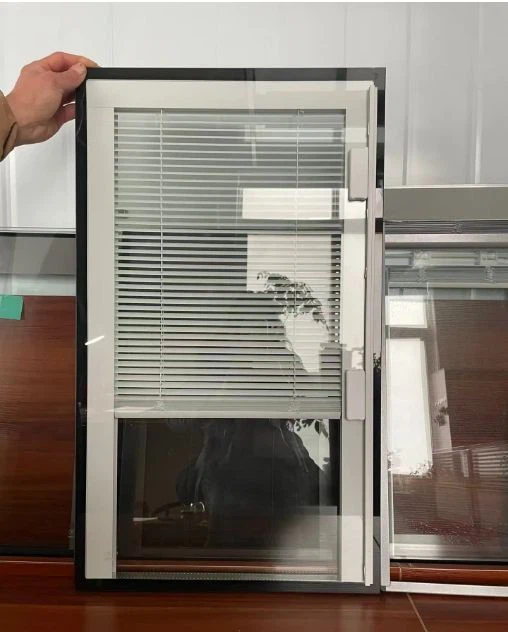
If you are interested in our shutter glasses, you can visit our website to learn more about our product range: Shutter Glass. We also offer other related products such as Transparent Louver Glass and Built - in Blinds Insulating Glass, which can be used in various architectural and decorative applications.
Conclusion
Shutter glasses are a fascinating technology that has revolutionized the way we experience 3D content. Their ability to provide a high - quality 3D experience through precise synchronization and fast - acting shutters makes them a popular choice in many industries.
Whether you are a consumer looking for a better home entertainment experience, a cinema operator seeking reliable 3D glasses for your audience, or a developer in the VR/AR field exploring new possibilities, our shutter glasses can meet your requirements.
If you are interested in purchasing our shutter glasses or discussing potential business opportunities, please feel free to contact us. We are committed to providing high - quality products and excellent customer service.
References
- "3D Display Technologies" by John F. Hughes, Andries van Dam, Morgan McGuire, David F. Sklar, James D. Foley, Steven K. Feiner, Kurt Akeley.
- "Liquid Crystal Displays: Addressing Schemes and Electro - Optical Effects" by Ernst Lueder.
