

Silver mirror glass is a popular choice in various applications, from interior decoration to high - tech industries. As a silver mirror glass supplier, I often get asked about its properties, and one question that comes up quite frequently is: Does silver mirror glass have anti - static properties? Let's dig into this topic and find out.
What is Silver Mirror Glass?
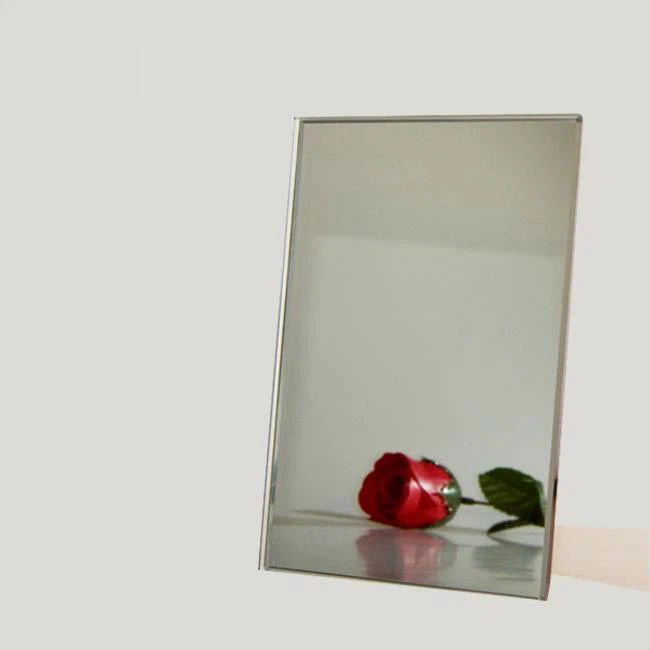
Before we jump into the anti - static properties, let's quickly go over what silver mirror glass is. Silver mirror glass is made by depositing a thin layer of silver on the back of a glass substrate. This process creates a highly reflective surface that's commonly used in mirrors, but also in things like display cases, furniture, and even some automotive applications.
We offer different types of silver mirror glass, such as Tempered Silver Mirror Glass, which is stronger and safer, Tinted Silver Mirror Glass, which can add a touch of style and privacy, and Bathroom Silver Mirror Glass, designed to withstand the humid conditions in bathrooms.
Understanding Static Electricity
To figure out if silver mirror glass has anti - static properties, we first need to understand what static electricity is. Static electricity is the build - up of electric charge on the surface of an object. It happens when two materials come into contact and then separate, causing electrons to transfer from one material to the other. This creates an imbalance of charges, with one material becoming positively charged and the other negatively charged.

You've probably experienced static electricity when you walk across a carpet and then get a shock when you touch a metal object. That's because your body has built up a static charge, and when you touch the metal, the charge is discharged.
Factors Affecting Static Build - Up
Several factors can affect whether an object builds up static electricity. The type of material is a big one. Some materials, like plastics, are more likely to build up static charge because they are insulators. Insulators don't allow electrons to move freely, so the charge can accumulate on the surface.
The humidity of the environment also plays a role. In dry conditions, static electricity is more likely to build up because there's less moisture in the air to help dissipate the charge. On the other hand, in a humid environment, the water molecules in the air can help conduct the charge away from the surface of the object.
Does Silver Mirror Glass Have Anti - Static Properties?
Now, let's get to the main question. Silver mirror glass has some characteristics that can influence its static - related behavior.
First, the glass itself is an insulator. Like other types of glass, it can build up static charge under certain conditions. However, the silver layer on the back of the glass is a conductor. Conductors allow electrons to move freely, which means that any static charge that builds up on the glass surface has the potential to be conducted away by the silver layer.
In practice, though, whether silver mirror glass actually has anti - static properties depends on a few things. If the silver layer is continuous and well - connected, it can act as a path for the static charge to flow, reducing the build - up of static on the glass surface. But if there are breaks or imperfections in the silver layer, its ability to conduct the charge may be limited.
The environment also matters. In a dry environment, even with the silver layer, the glass may still build up some static charge. But in a more humid environment, the combination of the silver layer and the moisture in the air can help prevent static build - up.
Testing for Anti - Static Properties
To determine if our silver mirror glass has anti - static properties, we've conducted some basic tests. We've measured the surface resistance of the glass, which is an indicator of how easily static charge can flow across the surface. Lower surface resistance means that the charge can flow more easily, which is a sign of better anti - static properties.
Our tests have shown that in general, our silver mirror glass with a well - formed silver layer has relatively low surface resistance compared to regular glass. This suggests that it has some ability to conduct static charge and reduce static build - up.
However, it's important to note that our silver mirror glass is not a complete anti - static solution. In high - static environments, such as some industrial settings or areas with very low humidity, additional anti - static treatments may be needed.
Applications and Benefits
The potential anti - static properties of silver mirror glass can be beneficial in several applications.
In interior design, static - free glass can be a plus. It won't attract dust and debris as easily as static - prone materials, which means it will stay cleaner for longer. This is especially important in display cases or furniture where a clean appearance is crucial.
In the electronics industry, static electricity can be a major problem. It can damage sensitive electronic components. Silver mirror glass with some anti - static properties can be used in electronic enclosures or display screens to help protect the electronics inside.
How to Enhance Anti - Static Properties
If you need silver mirror glass with even better anti - static properties, there are a few things you can do.
One option is to apply an anti - static coating to the glass surface. These coatings are designed to reduce the build - up of static charge by either conducting the charge away or by preventing the initial transfer of electrons.
Another way is to control the environment. As mentioned earlier, humidity can help reduce static build - up. So, in areas where static is a concern, using a humidifier can be a simple and effective solution.
Conclusion
So, does silver mirror glass have anti - static properties? The answer is that it can. The silver layer on the back of the glass has the potential to conduct static charge and reduce build - up, but its effectiveness depends on factors like the quality of the silver layer and the environment.
If you're in the market for silver mirror glass and anti - static properties are important to you, we're here to help. We can provide you with more information about the specific anti - static capabilities of our products and offer solutions to meet your needs. Whether you're looking for Tempered Silver Mirror Glass, Tinted Silver Mirror Glass, or Bathroom Silver Mirror Glass, we've got you covered.
If you're interested in purchasing our silver mirror glass or have any questions about its anti - static properties or other features, don't hesitate to get in touch. We're happy to discuss your requirements and help you make the right choice for your project.
References
- "Static Electricity: Principles and Applications" by A. D. Moore
- "Glass Science and Technology" by D. R. Uhlmann and N. J. Kreidl
